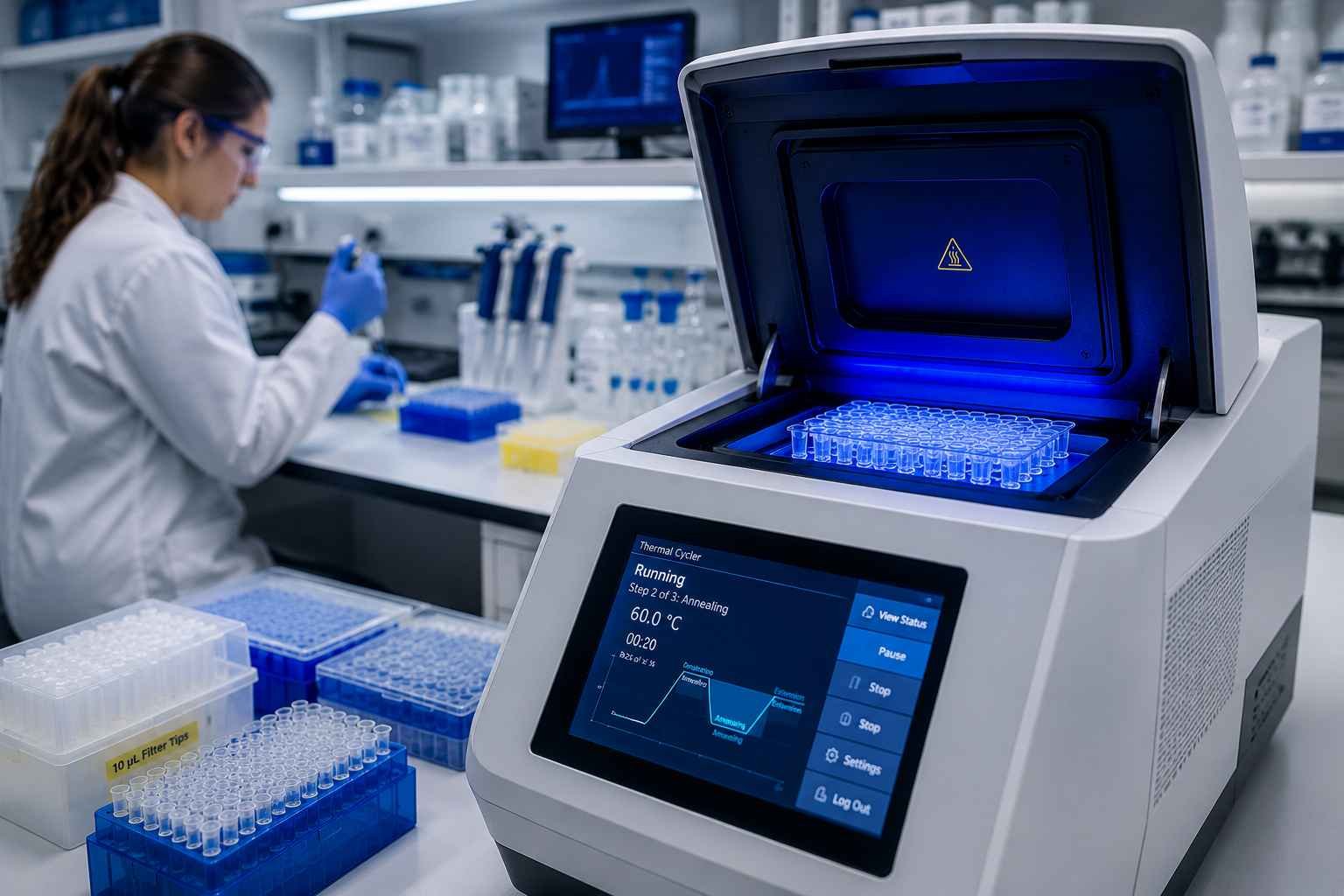
Since its invention in 1983, the polymerase chain reaction has fundamentally transformed biological and medical sciences. Today, PCR and its variants — quantitative PCR (qPCR), reverse transcription PCR (RT-PCR), digital PCR (dPCR) — are applied in genomics, infectious disease diagnostics, forensic science, oncology, and gene expression profiling. Selecting the best polymerase chain reaction kit for research is therefore one of the most impactful decisions a molecular biology laboratory can make.
This blog outlines the critical considerations for PCR kit selection and highlights the features that separate high-performance kits from mediocre ones.
Understanding the Core Components of a PCR Kit
A complete PCR kit typically contains the following components:
- DNA Polymerase: The enzyme at the core of every PCR reaction. High-fidelity polymerases (e.g., Pfu, Phusion, Q5) offer error correction, while Taq polymerase provides fast, cost-effective amplification for standard applications.
- Reaction Buffer: Optimized salt and pH conditions ensure consistent polymerase activity and primer annealing across diverse templates.
- dNTPs: Deoxynucleotide triphosphates provide the building blocks for DNA synthesis. Pre-balanced dNTP mixes eliminate a common source of variability.
- MgCl₂: Magnesium chloride is an essential cofactor for DNA polymerase. Many kits include a separate MgCl₂ tube for fine-tuning assay conditions.
- Fluorescent Dyes or Probes (for qPCR): SYBR Green or TaqMan probe-based detection systems enable real-time quantification in qPCR applications.
Types of PCR Kits and Their Research Applications
Standard PCR Kits
Designed for endpoint detection of specific DNA sequences, standard PCR kits are ideal for genotyping, colony screening, cloning, and template amplification. They prioritize speed and affordability without sacrificing reliability on clean template DNA.
High-Fidelity PCR Kits
When accuracy is paramount — as in cloning for expression vector construction, site-directed mutagenesis, or next-generation sequencing library preparation — high-fidelity PCR kits using proofreading polymerases are essential. Error rates as low as 1 per 10⁶ bases are achievable with premium polymerases, dramatically reducing the burden of sequence verification.
RT-PCR and RT-qPCR Kits
For gene expression analysis, RNA virus detection, and transcriptome studies, RT-PCR kits combine reverse transcriptase with DNA polymerase activity to convert RNA to cDNA and amplify it in the same reaction tube. One-step RT-qPCR kits minimize handling steps and are especially popular in clinical diagnostic settings.
Multiplex PCR Kits
Multiplex PCR kits allow simultaneous amplification of multiple targets in a single reaction, making them invaluable for pathogen panels, HLA typing, deletion analysis, and STR genotyping. Careful primer design and optimized buffer chemistry are critical for balanced amplification in multiplex settings.
Key Performance Parameters to Evaluate
When searching for the best polymerase chain reaction kit for research, evaluate these performance attributes:
- Sensitivity: Can the kit reliably amplify from low-copy-number templates or limiting amounts of clinical DNA?
- Specificity: Does the kit minimize non-specific amplification and primer dimer formation?
- Yield: Is sufficient product generated for downstream applications such as gel electrophoresis, sequencing, or restriction digestion?
- Thermostability: Is the polymerase robust across a wide range of cycling temperatures and fragment lengths?
- Compatibility: Does the kit work with your thermal cycler, detection chemistry, and downstream applications?
Common Pitfalls and How Quality Kits Address Them
Inhibitors in biological samples — hemoglobin in blood, humic acid in soil extracts, melanin in formalin-fixed tissues — can dramatically impair PCR efficiency. The best polymerase chain reaction kits for research include optimized enhancer additives, BSA, or hot-start polymerase technologies that suppress inhibitor effects and reduce non-specific amplification caused by low-temperature primer annealing during reaction setup.
Why MyBioSource for PCR Kits?
MyBioSource provides a carefully curated selection of PCR kits spanning standard, high-fidelity, RT-PCR, and qPCR applications. Their kits are performance-validated for diverse templates and sample types, backed by detailed technical documentation and responsive scientific support. From academic research to clinical diagnostic development, MyBioSource offers the molecular tools that modern research demands.
Conclusion
Choosing the best polymerase chain reaction kit for research requires a careful assessment of your target application, template characteristics, downstream workflow, and performance requirements. By prioritizing validated, application-appropriate kits from reputable suppliers like MyBioSource, researchers can confidently generate reproducible, high-quality PCR data that stands up to the scrutiny of peer review and regulatory evaluation.