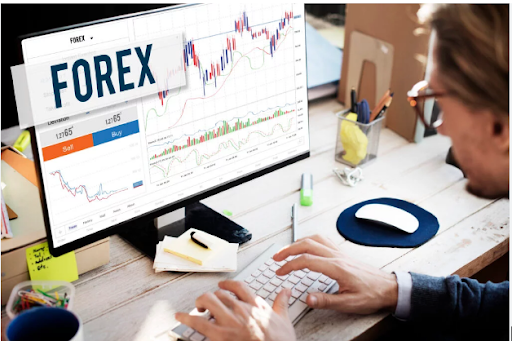
When beginners ask, what is forex trading, the simplest answer is that it involves taking a view on how one currency will perform against another. A trader is not deciding whether the euro is strong in isolation. The decision is whether it will strengthen or weaken relative to the dollar, pound, yen or another currency.
Prices move because businesses, banks, governments, investors and traders continuously exchange currencies. Their decisions reflect trade, investment, interest rates and changing expectations about national economies.
Every Trade Compares Two Currencies
Currency prices are displayed in pairs. If EUR/USD trades at 1.1000, one euro is worth 1.10 US dollars. Buying the pair means expecting the euro to gain against the dollar. Selling means expecting the dollar to outperform the euro.
This comparison explains why apparently weak economic news does not always hurt a currency. US growth may slow, but the dollar can still rise if conditions in Europe deteriorate faster. Both sides of the pair matter.
Interest rates receive particular attention because money tends to seek attractive returns. If markets expect the Federal Reserve to keep rates higher than the European Central Bank, dollar assets may become more appealing. Exchange rates can adjust before either institution changes policy.
The market trades tomorrow’s expectation through today’s price.
How a Position Makes or Loses Money
Suppose GBP/USD rises from 1.2500 to 1.2550. That is a movement of 50 pips, with a pip representing a standard minimum price increment for most currency pairs. A buyer may profit from the rise, while a seller may lose, depending on position size and transaction costs.
The spread is the difference between the price available to buyers and sellers. It acts as an immediate cost. Spreads can remain narrow in heavily traded pairs during active sessions and widen when liquidity becomes thin or economic news arrives.
Leverage allows a trader to control a position larger than the money reserved as margin. If the broker requires only a small deposit, the full position still responds to price movement.
That is where the arithmetic becomes misleading. A trade may look inexpensive to open but remain expensive to hold when it moves in the wrong direction. Margin describes collateral, not the maximum possible loss.
Why News Does Not Produce Simple Reactions
Consider EUR/USD consolidating below resistance before a US employment report. Payroll growth comes in weaker than forecast, and the dollar falls. EUR/USD breaks above the range as buyers respond to the possibility of lower US interest rates.
Minutes later, traders notice that wage growth remains firm and previous employment numbers were revised higher. Treasury yields recover, EUR/USD returns below resistance and the breakout fails.
Was the weak headline ignored? No. The market received several pieces of information and revised its first interpretation.
This scenario reveals a counterintuitive feature of currency markets: a trader can correctly understand the economic report and still lose money. Direction, timing and the price already reflecting expectations all affect the result.
Experienced traders compare the actual figure with the forecast, then watch whether price holds beyond an important level. Beginners are more likely to chase the first candle because the explanation appears obvious.
Obvious news is often the news most heavily priced in.
What Matters Before the First Trade
Anyone still wondering what is forex trading should focus less on predicting every market move and more on understanding exposure. The essential questions are straightforward: Which two currencies are being compared? What event could change their relative outlook? How much money will be lost if the idea fails?
Broker conditions also matter. Available leverage, spreads, financing charges and stop-out rules vary. A regulated broker should provide clear information about order execution, client funds and withdrawal procedures.
Trading hours deserve attention as well. Currency markets operate across major financial centres during the working week, but activity changes by session. EUR/USD is usually more active during European and North American hours, while pairs involving the Australian dollar or yen may respond more during Asian trading.
Before opening a first position, choose one major pair and record its current bid, ask and spread. Mark one support level, one resistance level and the next scheduled economic release. Decide where the market would invalidate the idea, then calculate the monetary loss at that point. If the minimum position size risks more than the account can reasonably absorb, leave the order unplaced rather than forcing the stop closer.