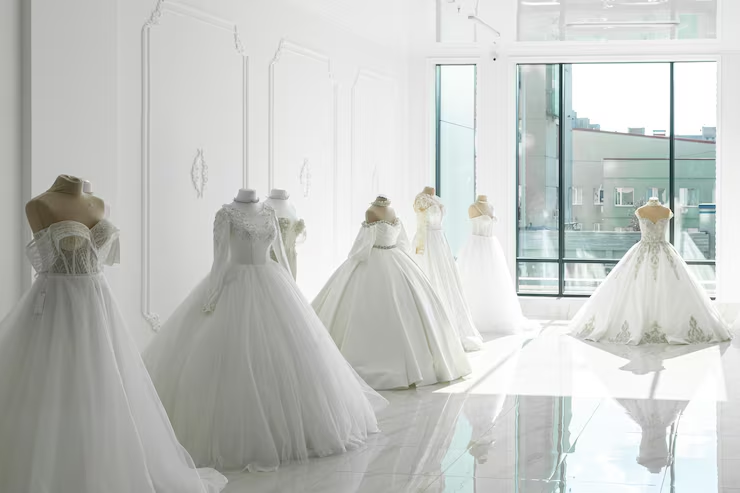
The bridal market is vast and often overwhelming for first-time buyers. Understanding the different tiers of the market—from mass-market bridal to true couture—helps prospective brides identify where to focus their search and what level of investment to expect. For those drawn to the idea of wearing a genuinely exceptional gown on their wedding day, couture wedding gowns represent the highest tier of craft and exclusivity in bridal fashion.
Defining Couture in a Bridal Context
The term ‘couture’ is used loosely in the fashion industry, but in its strictest sense it refers to garments made by hand to the specific measurements of an individual client, using the highest quality materials available. In bridal fashion, the term is applied across a spectrum—from gowns that are simply higher-priced to those that genuinely involve custom pattern drafting, hand-applied embellishment, and multiple fitting sessions.
True couture bridal gowns are made with attention to detail that extends to the interior structure of the dress—interior boning, custom-matched lining, and hand-finished seams that are invisible and secure. The exterior embellishment is hand-applied, which accounts for a significant portion of the production time and cost.
What the Production Process Looks Like
Commissioning a couture wedding gown typically involves an initial consultation to discuss silhouette, fabric, embellishment preferences, and budget. From there, a pattern is drafted based on the bride’s precise measurements. Multiple toile fittings—using an inexpensive mock-up fabric—are conducted before the final fabric is cut, allowing adjustments to be made at each stage of the process.
Understanding how couture wedding gowns are produced helps set realistic expectations about lead time, fitting requirements, and the degree of customization that is genuinely possible. A true couture gown cannot be produced in a few weeks—production timelines typically range from three to six months or longer, depending on the complexity of the embellishment and the workload of the atelier.
During the production process, the bride may be involved in decisions about specific embellishment details, lace placement, and finishing choices. This level of involvement makes the final garment a genuine collaboration and produces a result that reflects the bride’s individual vision rather than a pre-designed template.
Fabric Selection at the Couture Level
Fabric quality at the couture level is the most visible marker of the investment. French lace, duchess silk satin, hand-embroidered tulle, and silk organza are among the materials most commonly associated with bridal couture. These fabrics drape, move, and photograph with a quality that is immediately distinguishable from synthetic alternatives.
The choice of fabric determines not only the visual character of the gown but also its structure. Heavier fabrics like duchess silk satin hold architectural shapes naturally. Lighter fabrics like silk organza require careful construction to maintain volume and silhouette. The relationship between fabric and construction is central to what makes a couture bridal gown perform as intended on the wedding day.
Embellishment Techniques
Hand-applied embellishment is one of the defining features of couture bridal work. Beading, crystal application, and lace placement are all executed stitch by stitch by skilled artisans. The precision of hand-applied embellishment is visible in the final result—consistent spacing, secure attachment, and the ability to follow the contours of the fabric in ways that machine application cannot replicate.
Three-dimensional floral work—organza flowers, silk petals, and sculptural appliqués—is another couture embellishment technique that adds texture and visual complexity to bridal gowns. These elements are particularly effective in photographs, where the depth and dimensionality of handcrafted florals creates visual interest that flat embellishment cannot match.
Conclusion
Choosing a couture wedding gown is a decision that benefits from early planning, clear communication with the atelier, and realistic expectations about investment and timeline. The result—a gown made specifically to the bride’s measurements, in materials selected for their quality, with embellishment applied by hand—is a unique garment that no other bride will wear. For those who place a high value on craftsmanship and individuality, that distinction is the point.