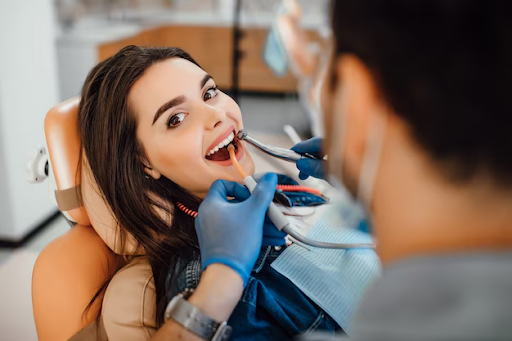
Ask most people what they’d change about their smile, and the answer usually isn’t dramatic — a chipped front tooth, some yellowing from years of coffee, a slight gap that’s bothered them since childhood photos. Interest in cosmetic dental treatment in Coventry tends to grow out of exactly these small, specific frustrations rather than a desire for a total overhaul.
Whitening Is Usually the First Step, Not the Last
For a lot of patients, teeth whitening is the entry point into cosmetic dentistry simply because it’s the least invasive option with the most visible result. Professional whitening, done under supervision rather than with over-the-counter kits, tends to produce more even results and carries less risk of sensitivity. That said, whitening only works on natural enamel — it won’t change the shade of existing crowns, veneers, or fillings, which is a detail that catches some patients off guard when a whitened smile ends up looking slightly mismatched.
Veneers Solve a Different Problem Than People Expect
There’s a common assumption that veneers are purely cosmetic, but in practice, they’re often used to correct issues that go beyond color — chips, uneven edges, minor gaps, or teeth that are slightly out of alignment but not enough to warrant orthodontic treatment. A thin shell of porcelain or composite is bonded to the front of the tooth, reshaping its appearance without the months-long commitment of braces or aligners. Patients weighing this option against other forms of cosmetic dental treatment often find veneers strike the best balance between speed and visible change.
Straightening Without the Metal-Mouth Stereotype
Clear aligner systems have changed what “orthodontic treatment” means for adult patients specifically. Where traditional braces were once the only option, most adults now have access to nearly invisible aligner trays that can be removed for eating and photos. Treatment time varies considerably depending on how much movement is needed — minor crowding might take a few months, while more significant misalignment can take well over a year.
Matching the Treatment to the Actual Goal
The mistake worth avoiding is choosing a treatment based on what’s trending rather than what actually solves the specific issue at hand. A gap between front teeth might be better addressed with a small orthodontic movement than a veneer, for instance, while a discolored tooth from an old root canal often needs an internal whitening approach that over-the-counter products can’t touch. Practices that walk patients through this decision — rather than defaulting to the most commonly requested treatment — tend to produce results people are happier with years later, not just in the first few months. The team’s full range of options is outlined on the practice’s website for anyone weighing up where to start.
A Word on Realistic Expectations
Social media has made it easy to walk into a consultation with a very specific image in mind, but not every smile is built the same way, and not every result is achievable on every set of teeth. A good consultation should involve an honest conversation about what’s realistically possible given someone’s natural tooth shape, gum line, and bite — not just an enthusiastic yes to whatever’s requested. Patients who go in with some flexibility, rather than a single fixed outcome in mind, tend to end up with results that feel natural rather than obviously “done,” which is usually the actual goal behind wanting cosmetic work in the first place.
Conclusion
A confident smile doesn’t have to come from a complete transformation. Often, the most satisfying results come from addressing one or two concerns with the treatment that’s best suited to your individual needs. Whether you’re considering whitening, veneers, or clear aligners, the key is starting with a professional assessment that focuses on long-term oral health as well as aesthetics. By understanding your options and setting realistic expectations, you can choose a cosmetic dental treatment that enhances your smile naturally and leaves you feeling