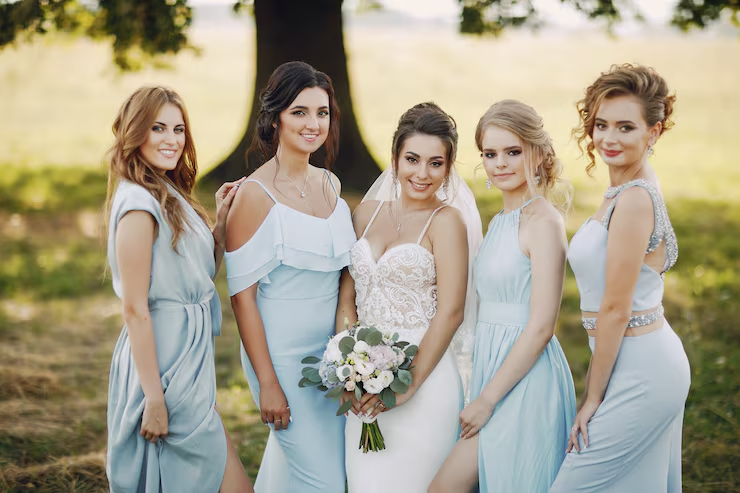
Choosing attire for a wedding party is rarely as simple as picking a color. There are silhouettes to consider, fabric weights to compare, and the challenge of finding something that flatters multiple body types at once. For couples who want something beyond off-the-rack options, couture bridesmaid dresses offer a level of construction and design detail that standard bridal collections often cannot match.
This guide breaks down what couture actually means in this context, what to look for when shopping, and how to make practical decisions for your wedding party.
What “Couture” Actually Means for Bridesmaid Dresses
The word couture is used loosely in fashion, but in the context of bridesmaid attire, it generally refers to dresses made with higher-quality construction techniques, more refined fabrics, and closer attention to fit and finish.
Key characteristics typically include:
- Structured boning or internal support rather than relying solely on undergarments
- Hand-finished seams that reduce bulk and improve drape
- Premium fabrics such as duchess satin, chiffon, crepe, or mikado
- Custom or semi-custom sizing options for a more tailored result
- Thoughtful design details like covered buttons, lace overlays, or draped backs
These elements combine to produce a garment that holds its shape throughout a long event and photographs well under different lighting conditions.
How to Choose the Right Silhouette
Silhouette is one of the most important decisions when selecting bridesmaid dresses, particularly when your party includes people of varying heights and body shapes.
A-line styles remain the most universally flattering. They cinch at the waist and flare gradually, which works across a wide range of body types without requiring significant alterations.
Column or sheath silhouettes suit taller frames well and create a sleek, modern look. However, they require more precise sizing and may need individual tailoring.
Wrap styles offer flexibility because the adjustable tie allows for some variation in fit, making them a practical choice for larger wedding parties.
Ball gown or full skirts add drama but can be difficult to manage during outdoor ceremonies or receptions with dancing. Consider the venue before committing to volume.
Fabric Selection and Its Practical Impact
Fabric choice affects more than aesthetics. It determines how a dress moves, how it holds up in heat, and how it photographs.
Chiffon is lightweight and flows easily, making it a popular choice for outdoor or warm-weather weddings. It layers well and is forgiving in terms of fit. However, it wrinkles easily and may require steaming on the wedding day.
Crepe is heavier and more structured. It resists wrinkles better than chiffon and gives a polished, modern appearance. It works particularly well for indoor or formal settings.
Satin has a high-sheen finish that reads beautifully in photographs but can highlight fit issues if the dress is not properly tailored. Duchess satin, a thicker variation, holds its shape better than standard satin.
Coordinating Without Matching Exactly
A growing trend in wedding styling is mixing shades within the same color family rather than dressing everyone identically. This approach works especially well with couture pieces because the quality of construction remains consistent even when colors or styles vary slightly.
Some couples choose one fabric and allow different silhouettes. Others select one silhouette and vary the shade. Both approaches create a cohesive look without the rigidity of a uniform.
The key is to establish one consistent element — whether that is color, fabric, or silhouette — and allow variation in the others.
Conclusion
Selecting bridesmaid attire at a couture level is ultimately about prioritizing construction, fit, and longevity over convenience. When the details are done well, the dresses serve the wedding party rather than the other way around. Understanding silhouette, fabric, and coordination principles before shopping makes the entire process more straightforward and leads to results that hold up well on the day and in photographs for years afterward.